246 hp, 395 hp or 575 hp: Which 2026 F-Pace Engine Fits Your Driving Life?
May 26 2026,
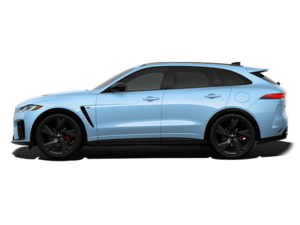
The 2026 Jaguar F-Pace offers three powertrains without changing the fundamentals. All three pair with the same 8-speed automatic and all-wheel drive. The Pivi Pro infotainment, the interior quality, and the F-Pace’s core driving character carry across every version. What changes is how much performance you want, how much fuel consumption you can absorb, and what kind of driving fills most of your week.
That range runs from 246 hp to 575 hp. Three meaningfully different vehicles in the same body. This guide matches each engine to a clearly defined driver profile to help you find the right configuration before stepping into the dealership.
At a Glance: The Three F-Pace Powertrains
|
Trim |
Engine |
Power |
Torque |
Drive |
|
P250 R-Dynamic S |
2.0 L turbocharged I4 |
246 hp |
269 lb-ft |
AWD |
|
P400 R-Dynamic S |
3.0 L turbocharged I6, 48V mild hybrid |
395 hp |
406 lb-ft |
AWD |
|
SVR 575 Edition |
5.0 L supercharged V8 |
575 hp |
516 lb-ft |
AWD |
The P250 R-Dynamic S: Best for the Efficiency-First Driver
The P250 is powered by a 2.0 L turbocharged four-cylinder producing 246 hp and 269 lb-ft of torque. For a vehicle of the F-Pace’s size, that output handles daily driving without strain. City traffic, highway merging, loaded weekend runs — the P250 covers all of it in a way that never feels underpowered for normal use.
The efficiency case is straightforward. In Canadian driving conditions, the P250 returns approximately 9.9 L/100 km combined, which makes it the most economical path into the F-Pace lineup by a significant margin. Over a full year of daily driving, that difference adds up in a way that matters to buyers who are thinking practically about total ownership cost.
The R-Dynamic S trim level also ensures this isn’t a stripped-down entry point. The Pivi Pro infotainment system, 12.3-inch digital instrument cluster, wireless Apple CarPlay and Android Auto, heated front seats, and 12-way power-adjustable front seats with driver memory all come standard. The technology and interior quality match what you’d find further up the lineup.
P250 is the right choice if: - Daily commuting and occasional highway driving define your typical week - Fuel economy is a real factor in your purchase decision - You want the F-Pace’s cabin quality and technology without the running costs of a larger engine - You’re not regularly pushing the vehicle to its performance limits
The P400 R-Dynamic S: Best for the Performance Daily Driver
The P400 steps up to a 3.0 L turbocharged inline-six engine with a 48-volt mild hybrid system. Output is 395 hp and 406 lb-ft of torque. The mild hybrid doesn’t provide electric-only driving range, but it does smooth power delivery and assists the engine under lighter loads, which takes the edge off fuel consumption during stop-and-go driving.
This is the most balanced position in the lineup. The six-cylinder gives the P400 noticeably more urgency than the four-cylinder — the response when pulling out of intersections, passing on the highway, or carrying speed into corners is in a different category. At the same time, it doesn’t carry the fuel demands or the weight of the V8. For a driver who uses their SUV hard every day and wants that performance to feel effortless rather than occasional, the P400 makes a coherent argument.
Adaptive suspension is available on this trim as well, adjusting continuously to road surface and drive mode, with a real effect on comfort and handling across varied road conditions.
P400 is the right choice if: - You want meaningful performance in everyday driving, not just on spirited runs - The mild hybrid efficiency advantage matters to you more than absolute V8 output - You drive a mix of city and highway regularly and want a powertrain that handles both well - You value a refined, six-cylinder character over the supercharged V8 experience
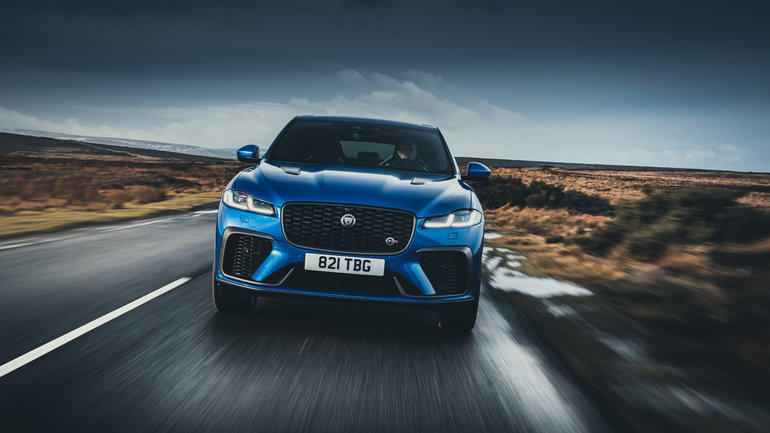
The SVR 575 Edition: Best for the Driver Who Wants the Last Jaguar V8
The SVR 575 Edition is built around a 5.0 L supercharged V8 producing 575 hp and 516 lb-ft of torque. It reaches 100 km/h from rest in 4.0 seconds. For context, that puts it in the same performance bracket as dedicated sports cars, in a vehicle that also seats five and carries 650 litres of cargo behind the rear seats.
The performance case is clear. What makes the SVR more specific than a numbers exercise is the context around it: Jaguar has confirmed this is the final V8 they will build for an SUV. Production of the F-Pace ended at the Solihull plant in December 2025. The SVR 575 Edition is, in literal terms, the last of this powertrain. For buyers who care about that — about owning the last expression of a combustion-era performance Jaguar SUV — the scarcity is real, not marketing language.
The SVR also arrives with hardware specific to this trim. The Variable Valve Active Exhaust System adjusts the exhaust character based on drive mode. Configurable Dynamics lets the driver set suspension, throttle response, and steering independently. JaguarDrive Control with Adaptive Surface Response manages traction across road conditions. The aerodynamic body kit — hood vents, enlarged front intakes, side fender vents, rear spoiler — manages airflow at speed rather than serving as visual differentiation. Fuel consumption sits at approximately 14.5 L/100 km combined.
SVR is the right choice if: - The powertrain itself is a priority, not just the output figure - You want the full combustion experience before the brand moves entirely to electric - You’re prepared for V8 running costs and view them as part of the ownership - The SVR’s scarcity as the final Jaguar V8 SUV factors into your long-term ownership outlook
Which F-Pace Is Right for You?
There is no weak option in the F-Pace lineup. The P250 makes a strong case for buyers who want efficiency and refinement without sacrificing the interior or driving character that defines the F-Pace. The P400 sits in the middle ground in the most useful way: it’s fast enough to feel genuinely sporting every day and responsible enough not to demand constant attention at the fuel pump. The SVR is built for a specific buyer who wants maximum output and the knowledge that this engine will not appear in another Jaguar.
All three drive the same road, with the same chassis, the same interior quality, and the same fundamental character. The decision comes down to what you want from the powertrain.
Talk to the Team at Décarie Jaguar in Montréal
The difference between these three engines is significant enough that driving all three back-to-back changes most buyers’ thinking. The team at Décarie Jaguar in Montréal can walk you through each configuration, answer questions about equipment levels and options, and help you find the version that fits how you actually drive. Stop in or reach out to get started.